Categorie
Nuovo blog
Domande frequenti sugli altoparlanti da soffitto: una guida pratica per progetti audio moderni
May 19 , 2026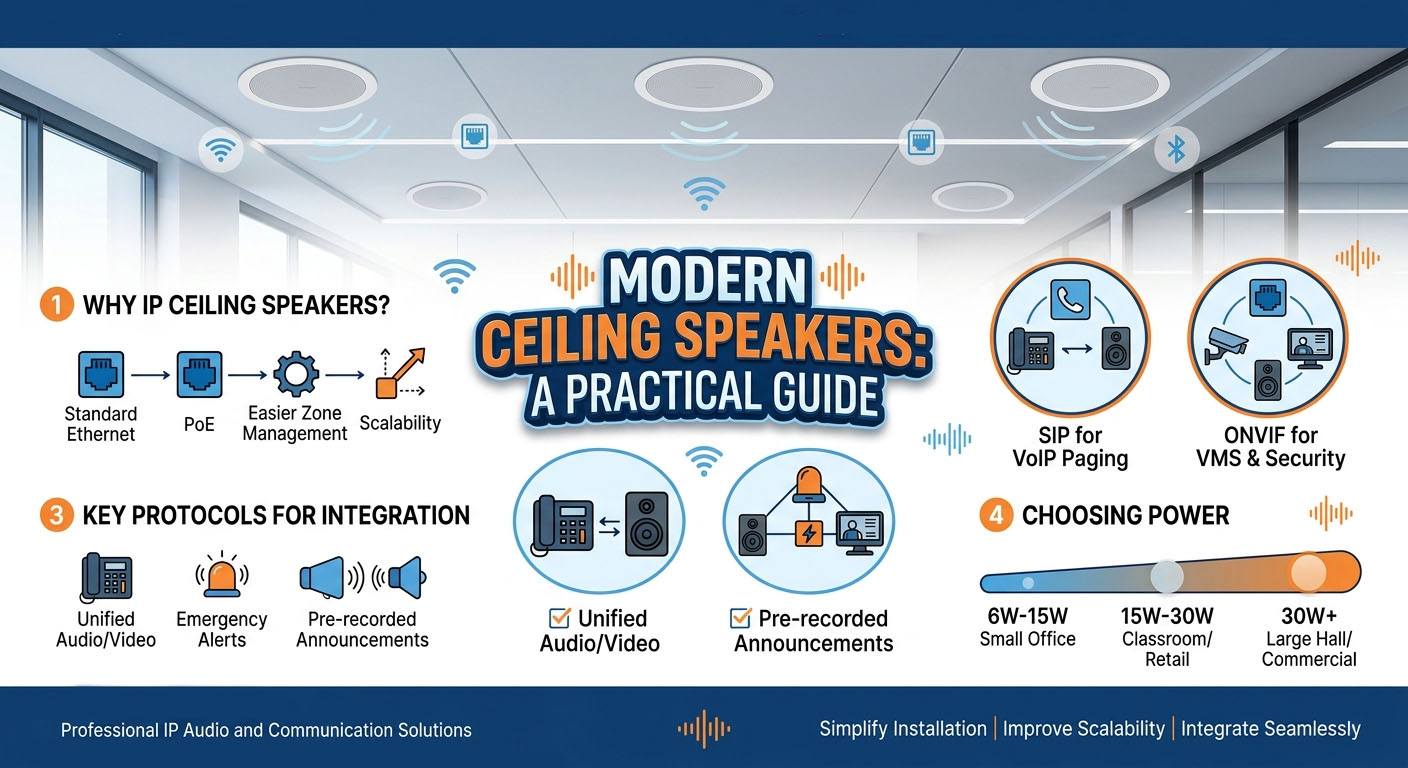
Tuttavia, molti clienti hanno ancora domande prima di scegliere la soluzione più adatta. Qual è la differenza tra un altoparlante da soffitto tradizionale e un altoparlante IP? Di quanta potenza ha bisogno? L'altoparlante è compatibile con un sistema SIP o una piattaforma di sicurezza? E che ruolo svolge ONVIF nell'integrazione audio moderna?
Questo articolo risponde ad alcune delle domande più frequenti sugli altoparlanti da soffitto, illustrando al contempo come le soluzioni audio di rete TONMIND siano progettate per gli ambienti PA intelligenti di oggi.
Un altoparlante da soffitto è un dispositivo audio installato a filo nella struttura del soffitto per fornire una copertura sonora diffusa. Rispetto agli altoparlanti a parete o a tromba, gli altoparlanti da soffitto sono più discreti e ideali per ambienti interni in cui l'estetica è importante.
Sono comunemente utilizzati in:
● Uffici
● Scuole e università
● Hotel
● Ospedali
● centri commerciali
● Sale conferenze
● Aeroporti
● Negozi al dettaglio
I moderni diffusori da soffitto non si limitano più ai sistemi audio analogici. Grazie allo sviluppo della tecnologia audio di rete, i diffusori da soffitto basati su IP offrono ora molta più flessibilità e funzionalità.
I diffusori analogici tradizionali richiedono solitamente amplificatori centralizzati, cablaggi complessi e opzioni di controllo limitate. Al contrario, un diffusore IP funziona direttamente sulla rete utilizzando la normale infrastruttura Ethernet.
Gli altoparlanti da soffitto IP TONMIND sono progettati per semplificare l'installazione e la gestione del sistema, migliorando al contempo la scalabilità per progetti di grandi dimensioni. Grazie alla tecnologia PoE, sia l'alimentazione che i dati audio possono essere trasmessi tramite un singolo cavo di rete, riducendo la complessità dell'installazione e i costi complessivi di manutenzione.
Per gli edifici moderni e le strutture intelligenti, questo approccio offre diversi vantaggi:
● Gestione delle zone più semplice
● Configurazione e monitoraggio da remoto
● Espansione flessibile
● Migliore qualità audio
● Integrazione con l'infrastruttura di rete esistente
● Implementazione più rapida per progetti su larga scala
Il protocollo SIP (Session Initiation Protocol) è ampiamente utilizzato nei sistemi di comunicazione VoIP. Nelle applicazioni di trasmissione audio, il SIP consente agli oratori di comunicare direttamente con i sistemi IP PBX, i telefoni VoIP e i server di paging.
Gli altoparlanti da soffitto TONMIND sono compatibili con il protocollo SIP standard, consentendo agli utenti di effettuare annunci in tempo reale, trasmissioni di emergenza e comunicazioni bidirezionali tramite i sistemi di comunicazione di rete esistenti.
Ad esempio, in un ambiente scolastico:
● Gli amministratori possono effettuare annunci direttamente da un telefono SIP
● Gli avvisi di emergenza possono essere attivati istantaneamente
● Zone diverse possono ricevere messaggi diversi
● Il sistema può integrarsi con le infrastrutture di comunicazione esistenti.
Ciò rende gli altoparlanti compatibili con SIP particolarmente utili per campus universitari, fabbriche, edifici commerciali e progetti di pubblica sicurezza.
Molti clienti associano ONVIF esclusivamente alle telecamere di sorveglianza, ma sta acquisendo sempre maggiore importanza anche nei sistemi audio di rete professionali.
Gli altoparlanti TONMIND supportano gli standard ONVIF, consentendo una perfetta integrazione con i sistemi di gestione video (VMS) e le piattaforme di sicurezza.
In termini pratici, ciò significa:
● Gli operatori della sicurezza possono attivare annunci in diretta dal centro di monitoraggio
● Gli avvisi audio possono essere collegati agli eventi delle telecamere.
● I messaggi preregistrati possono essere riprodotti automaticamente durante gli allarmi
● I dispositivi audio possono essere gestiti direttamente tramite software VMS compatibile.
Nei progetti integrati di sicurezza e comunicazione, la compatibilità ONVIF migliora notevolmente l'interoperabilità tra sistemi audio e video.
Dipende dal tipo di altoparlante.
I tradizionali diffusori passivi da soffitto solitamente richiedono un amplificatore esterno. I diffusori da soffitto TONMIND IP, invece, includono un amplificatore integrato, eliminando la necessità di apparecchiature di amplificazione aggiuntive in molte installazioni.
Questo design integrato contribuisce a ridurre:
● costi di installazione
● utilizzo dello spazio rack
● Complessità del cablaggio
● Tempo di installazione
Per gli appaltatori e gli integratori di sistemi, ciò può semplificare notevolmente l'implementazione del progetto.
La scelta della potenza degli altoparlanti dipende dall'ambiente di installazione e dalla copertura sonora prevista.
Le raccomandazioni tipiche includono
|
Ambiente
|
Potenza suggerita
|
|
Ufficio piccolo / sala riunioni
|
6W–15W
|
|
Aula / negozio al dettaglio
|
15W–30W
|
|
Ampio salone/zona commerciale
|
3
0W+
|
TONMIND offre molteplici configurazioni di altoparlanti da soffitto adatte a diversi scenari commerciali e industriali, consentendo un'installazione flessibile sia per progetti di sistemi di diffusione sonora di piccole dimensioni che di grandi dimensioni.
Sì. Infatti, molte strutture moderne utilizzano altoparlanti di rete a soffitto come parte della loro infrastruttura di comunicazione di emergenza.
Grazie al supporto di SIP, ONVIF, integrazione con sistemi di allarme e gestione remota, i prodotti audio IP di TONMIND possono essere integrati nei sistemi di notifica di emergenza per:
● Allarmi antincendio
● Avvisi di sicurezza
● Istruzioni di evacuazione
● Annunci programmati
● Avvisi di pubblica sicurezza
Grazie all'integrazione con un software di gestione centralizzato, gli amministratori possono trasmettere messaggi in tempo reale a zone specifiche o a intere strutture.
TONMIND si concentra su soluzioni audio e di comunicazione IP professionali per applicazioni commerciali e industriali. L'azienda offre una vasta gamma di prodotti, tra cui:
● Altoparlanti IP da soffitto
● Altoparlanti a tromba SIP
● Altoparlanti IP a parete
● Sistemi audio di rete
● Dispositivi di interfono
● Microfoni per cercapersone
Molti prodotti TONMIND supportano sia i protocolli SIP che ONVIF, risultando quindi compatibili contemporaneamente con i sistemi VoIP e le piattaforme di sicurezza.
L'azienda offre anche servizi di personalizzazione OEM/ODM per soddisfare le diverse esigenze di progetto in tutto il mondo.
Gli altoparlanti a soffitto si sono evoluti ben oltre la semplice funzione di dispositivi per la diffusione di musica di sottofondo. Negli edifici intelligenti moderni, svolgono ora un ruolo importante nella comunicazione, nella sicurezza, nella gestione delle emergenze e nella trasmissione di rete.
Grazie alla combinazione della tecnologia IP Speaker con la comunicazione SIP e l'integrazione ONVIF, i moderni sistemi audio possono diventare più flessibili, scalabili ed efficienti rispetto alle tradizionali soluzioni analogiche.
Che si tratti di progettare una scuola intelligente, un edificio commerciale, un nodo di trasporto o un progetto di sicurezza integrato, la scelta della giusta soluzione audio di rete può fare una grande differenza in termini di prestazioni del sistema a lungo termine ed efficienza di gestione.